Solar Subsidy Karnataka: Scheme, Benefits & How to Apply



Karnataka has emerged as one of the leading states in India in terms of adopting clean energy solutions.
With strong state and central government support, solar panel installation has now become more affordable for apartments, homeowners, and educational institutions.
Subsidy schemes help reduce the upfront cost and make rooftop solar a valuable and practical long-term investment.
Keep reading as we explain the solar subsidy scheme in Karnataka, including eligibility conditions, benefits, required documents, and the step-by-step application process, so you can clearly understand the process and make better-informed decisions.
Solar Subsidy Scheme in Karnataka
Karnataka follows a well-structured rooftop solar subsidy framework where central government incentives work alongside state-level solar policies.
The subsidy schemes have been designed in a way to simplify approvals, reduce upfront costs, and encourage grid-connected solar installations for institutional and residential users.
Central Government Scheme (PM Surya Ghar Muft Bijli Yojana)
PM Surya Ghar Muft Bijli Yojana is a national scheme that supports residential rooftop solar installations in the form of direct financial assistance.
The subsidy amount clearance depends on system size, and it gets credited only after successful installation, inspection, and net meter approval.
This particular scheme is eligible only to grid-connected rooftop solar systems that meet MNRE technical standards.
Karnataka State Rooftop Solar Policy
The Karnataka state rooftop solar policy supports group housing and residential installations by enabling easy grid connectivity and energy export.
It lets consumers generate electricity for self-use and send excess power back to the grid, helping reduce their monthly electricity bills, following net metering rules.
Role of BESCOM, HESCOM, MESCOM, CESC & GESCOM
The BESCOM, HESCOM, MESCOM, CESC, and GESCOM are electricity distribution companies that manage application approvals, site inspections, net meter installation, and billing settlements.
Based on your current location within Karnataka, you need to apply under the respective DISCOM.
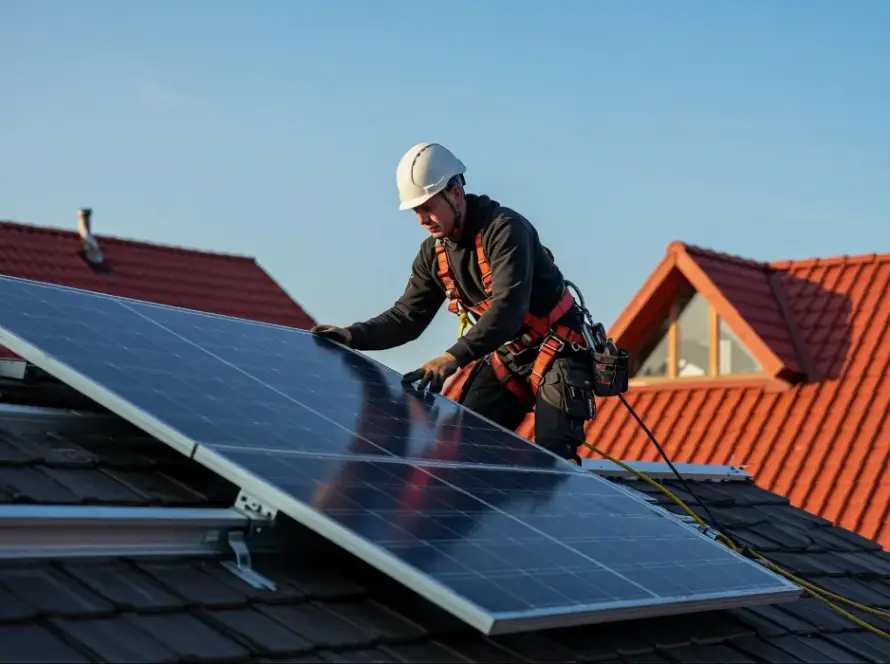
Our in-house team of solar panel experts will handle the solar panel installation and subsidy application process, ensuring it complies fully with both central and state installation and subsidy guidelines.
Solar Subsidy Amount in Karnataka
Determining and understanding the exact subsidy amount will help in planning your solar investment better.
Karnataka follows the MNRE-defined subsidy structure for residential rooftop solar systems, with a fixed maximum limit.
Subsidy for Residential Rooftop Solar
| System Size | Subsidy Amount |
| 1 kW | ₹30,000 |
| 2 kW | ₹60,000 |
| 3 kW | ₹78,000 |
| Above 3 kW | Maximum ₹78,000 |
The approved subsidy amount will be released only after DISCOM inspection and net meter commissioning.
Is Subsidy Available for Apartments & Societies?
Yes. Apartment complexes and housing societies are eligible to apply for a subsidy through rooftop solar installations, provided they meet the respective technical and ownership requirements.
Is There Any Subsidy for Commercial Buildings?
Commercial and industrial buildings remain ineligible for residential subsidies. On the other hand, they can benefit from other incentives like operational savings and accelerated depreciation.
Our solar panel experts will help in choosing the right system size that meets your solar power generation needs and to receive the maximum subsidy without compliance issues.
Solar Panel Cost in Karnataka After Subsidy
The final cost of a rooftop solar system depends on equipment quality, system capacity, and installation complexity. Subsidy support will significantly reduce the upfront investment for residential users.
Typical Rooftop Solar Price in Karnataka
Below-mentioned is an approximate price of installing rooftop solar in Karnataka. Prices will vary based on roof type and component specifications.
- 1 kW system: ₹60,000 to ₹80,000
- 3 kW system: ₹1.8 lakh to ₹2.4 lakh
- 5 kW system: ₹3 lakh to ₹3.8 lakh
3 kW System Cost After Subsidy
- Approximate system cost: ₹2.1 lakh
- Subsidy received: ₹78,000
- Final payable amount: ₹1.32 lakh
Payback Period & Electricity Savings
Most residential systems can easily recover the cost of investment within a period of 4 to 6 years. Savings continue for 20+ years, based on your usage and tariff rates.
Get hold of clear cost estimates and realistic payback calculations with the help of our solar panel installation experts.
Eligibility for Solar Subsidy in Karnataka
Eligibility depends on the type of consumer, property ownership, and whether the installed system meets grid-connection requirements as set by the government and DISCOMs.
Who Can Apply?
- Individual homeowners
Homeowners having a valid electricity connection along with legal rights or ownership over the property can directly apply for the residential rooftop solar subsidy, provided the system is grid-connected.
- Apartment societies
Registered housing societies and apartment associations are eligible for group housing solar installations, where the system gets installed on common rooftops and the power generated through it benefits multiple units.
- Farmers
Farmers can apply under solar subsidy schemes designed for agricultural use, especially to operate rural energy applications and solar-powered pumps.
- Government buildings
Based on renewable energy programmes, government institutions and government-owned buildings are eligible for solar support.
Who Is Not Eligible?
Applicants using commercial-only installations, off-grid solar systems, or those who complete the installation process even before registering on the official solar portal are not eligible for the residential subsidy.
Our solar panel experts will verify your eligibility in advance to avoid subsidy delays or rejection.
Documents Required for Karnataka Solar Subsidy
Proper documentation is crucial for successful subsidy approval. Incorrect or missing documents will only lead to portal rejections.
Required documents include:
- Aadhaar card
- Property ownership proof
- Latest electricity bill
- Rooftop photographs
- Bank account details
We assist you in preparing and uploading accurate documents to ensure smooth and timely Kartanaka solar subsidy approval.
How to Apply for Solar Subsidy in Karnataka
Applying for solar subsidy in Karnataka involves following the step-by-step digital process coordinated with MNRE guidelines and DISCOMs.
Step-by-Step Application Process
- Register on the National Rooftop Solar Portal
- Select Karnataka DISCOM
- Choose us as your MNRE-approved installer from the list
- Complete the solar panel installation in your place
- Apply for net meter by providing the respective documents
- Upload the installation completion report and wait for approval
- Receive subsidy in your bank account
Subsidy usually gets credited within 30 to 60 days after DISCOM approval.
Net Metering Rules in Karnataka
Net metering plays a key beneficial role for grid-connected rooftop solar systems. It lets you export unused electricity to the grid.
What Is Net Metering?
Net metering is used to record both electricity consumed from the grid and electricity exported by the solar system, further adjusting them against each other.
How Karnataka DISCOM Calculates Exported Units
Exported units will be measured through a bi-directional meter and adjusted during your every monthly billing cycle.
Billing & Settlement Cycle
Bills reflect net energy consumption, and surplus units generated will be carried forward as per DISCOM rules.
Our experts ensure proper net metering setup so you can avail accurate billing benefits.
Special Solar Subsidy Schemes in Karnataka
Other than residential rooftop subsidy schemes, Karnataka also supports solar adoption in agriculture and rural areas.
These schemes directly focus on improving energy access, reducing electricity costs, and promoting sustainable power use in non-urban areas.
Surya Raitha Scheme for Farmers
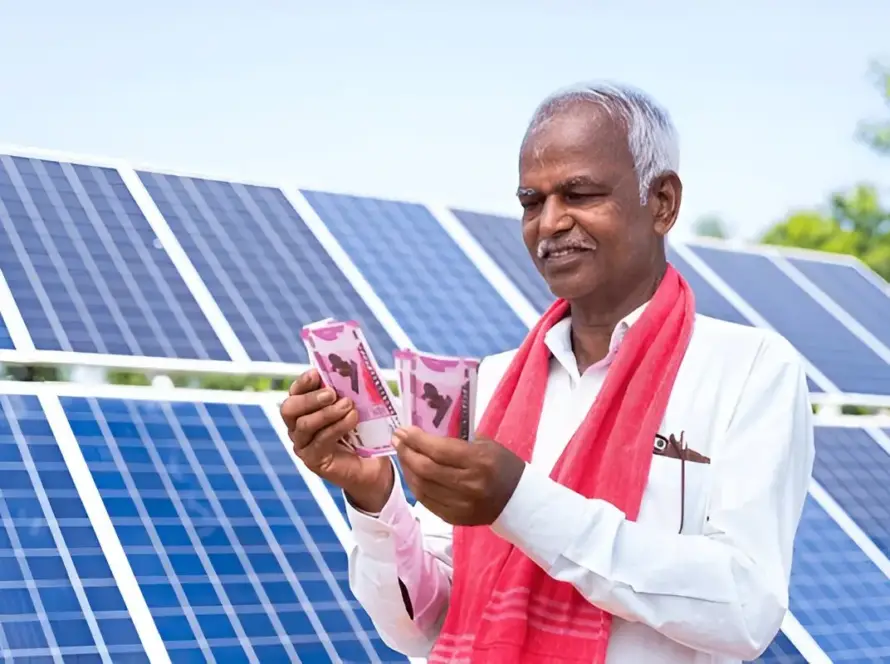
The Surya Raitha Scheme supports farmers by promoting solar-powered irrigation pumps, letting them reduce dependency on grid electricity and diesel consumption.
Under this particular special solar subsidy scheme, farmers can now generate their own power to perform various agricultural activities while lowering long-term operating costs.
PM Kusum Yojana
PM Kusum Yojana encourages the use of solar energy in the agricultural sector by supporting small grid-connected solar plants and solar pump installations.
This particular scheme helps farmers gain reliable daytime continuous power supply and additional income opportunities through energy generation.
Rural & Agricultural Solar Programs
All these programs together aim to improve electricity access in rural areas and promote decentralised solar systems for farms and remote locations.
They also help reduce load on conventional power infrastructure and support sustainable rural development.
Based on your solar power generating needs and location, our certified experts will find the most suitable special subsidy scheme.
Benefits of Installing Solar in Karnataka
Installing solar power in Karnataka offers long-term and multiple practical advantages for institutions and homeowners, especially when combined with government subsidy support and net metering policies.
Reduced Electricity Bills
Solar systems generate power during the daytime, which directly helps reduce the amount of electricity you can draw from the grid. Over time, this leads to noticeable savings on your monthly electricity bills.
Government Subsidy Support
Subsidies lower the upfront cost needed to install a rooftop solar system, making solar energy more affordable for residential users. This kind of financial support helps shorten the payback period.
High Solar Power Generation
Karnataka receives good sunlight for most part of the year, allowing solar systems to generate consistent and sufficient power. This makes rooftop solar installation a solid and practical solution.
Long System Life
Solar panels have been designed in a way to last from 20 to 25 years with minimal maintenance. This long lifespan ensures stable savings and energy generation over many years.
Increased Property Value
Homes adopting rooftop solar systems are most often seen as more energy-efficient and future-ready. This will positively impact your property value and appeal to potential buyers.
Common Problems While Claiming Solar Subsidy
Many applicants face rejection or delays of their solar subsidy due to procedural mistakes rather than policy issues. Understanding the common problems in advance will help you avoid facing unnecessary delays and ensure a smoother approval process.
Net Meter Delays
Delays in net meter installation is one among the most common reasons subsidy disbursement gets postponed.
This mostly happens due to incomplete coordination from the applicant and scheduling issues with the local electricity board.
Installer Not Approved
If the installer is not registered with the local DISCOM or not MNRE-approved, then the subsidy application might be rejected.
Choosing an authorised installer like us is essential for subsidy eligibility.
DISCOM Inspection Issues
Subsidy approval depends on successful inspection by the DISCOM after installation.
Any kind of mismatch found in system capacity, documentation, or wiring can only lead to repeated visits or inspection failure.
Portal Document Rejection
Unclear, incorrect, or missing documents uploaded on the national solar portal most often result in direct rejection.
Errors in bank information, bill details, or property proof lead to portal document rejection.
Hiring professional support from our certified solar panel experts will help you avoid facing common mistakes during subsidy claims.
How to Choose the Right Solar Company in Karnataka
Choosing the right solar company is crucial for subsidy approval, smooth installation, and long-term system performance.
A renowned installer will help you avoid unexpected costs after installation, technical issues, and approval delays.
MNRE Approval
The solar company you have chosen to hire solar panel installation services at your place must be MNRE approved in the first place. This is mandatory for availing of both state and central government subsidies.
MNRE approval ensures the installer follows the respective safety and technical standards as set by the government.
DISCOM Experience
An experienced solar company must be familiar with Karnataka DISCOM procedures like HESCOM, BESCOM, or MESCOM.
The more experience they have, the faster net meter installation, inspection, and smoother subsidy processing can be expected.
Warranty, AMC & Service Coverage
A good solar company will offer optional maintenance support after installation and follow clear product warranties.
Having reliable service coverage ensures your solar system continues to perform well all throughout its lifespan.
With our in-house team of trained and certified experts, we meet MNRE standards and have plenty of experience in installing rooftop solar panels in Karnataka.
Frequently Asked Questions (FAQ)
1. How much subsidy can I get in Karnataka?
You can receive a maximum subsidy of up to ₹78,000 for a residential grid-connected rooftop solar system, depending on the system capacity.
2. Is a subsidy available for apartments in Karnataka?
Yes, apartment associations and housing societies can apply for subsidy through group rooftop solar installations, subject to eligibility guidelines.
3. Is a subsidy available for off-grid solar systems?
No, the solar subsidy in Karnataka is available only for grid-connected rooftop solar systems and not for off-grid setups.
4. How long does it take to receive the subsidy?
The subsidy is usually credited within 30 to 60 days after successful installation, inspection, and net meter approval by the DISCOM.
5. Can I apply for a subsidy after installation?
No, you must register on the official solar portal and receive approval before starting the installation to be eligible for subsidy.
6. Which electricity board handles solar subsidy in Karnataka?
The subsidy process is handled by the local DISCOM like BESCOM, HESCOM, MESCOM, CESC, or GESCOM, based on your location in Karnataka.
Conclusion
Karnataka is known for offering one of the best structured rooftop solar subsidy frameworks in India, backed by strong DISCOM and government support.
With financial incentives, clear rules, and long-term savings, solar adoption will be your practical step toward attaining energy independence.
At EL SOL Power Solutions, the best solar company in Karnataka, we ensure the subsidy application process remains smooth and compliant.
Our experts will support customers at every stage, starting from subsidy eligibility checks to subsidy credit, making the transition to solar simple and more reliable than ever.
We are one phone call away to offer a sample quote and clear your Karnataka solar subsidy application-related queries.