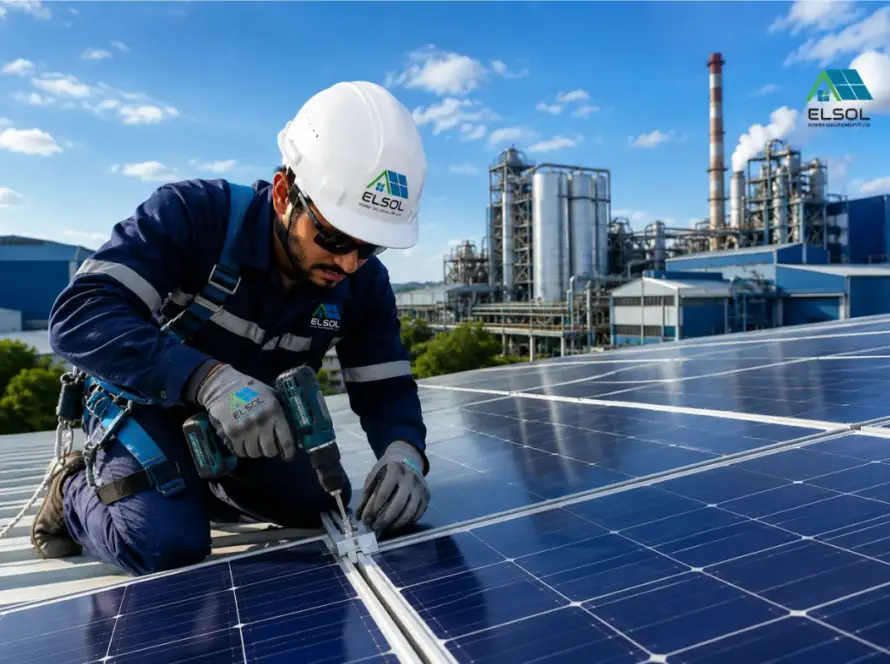
Rooftop Solar for Factories and Industrial Buildings
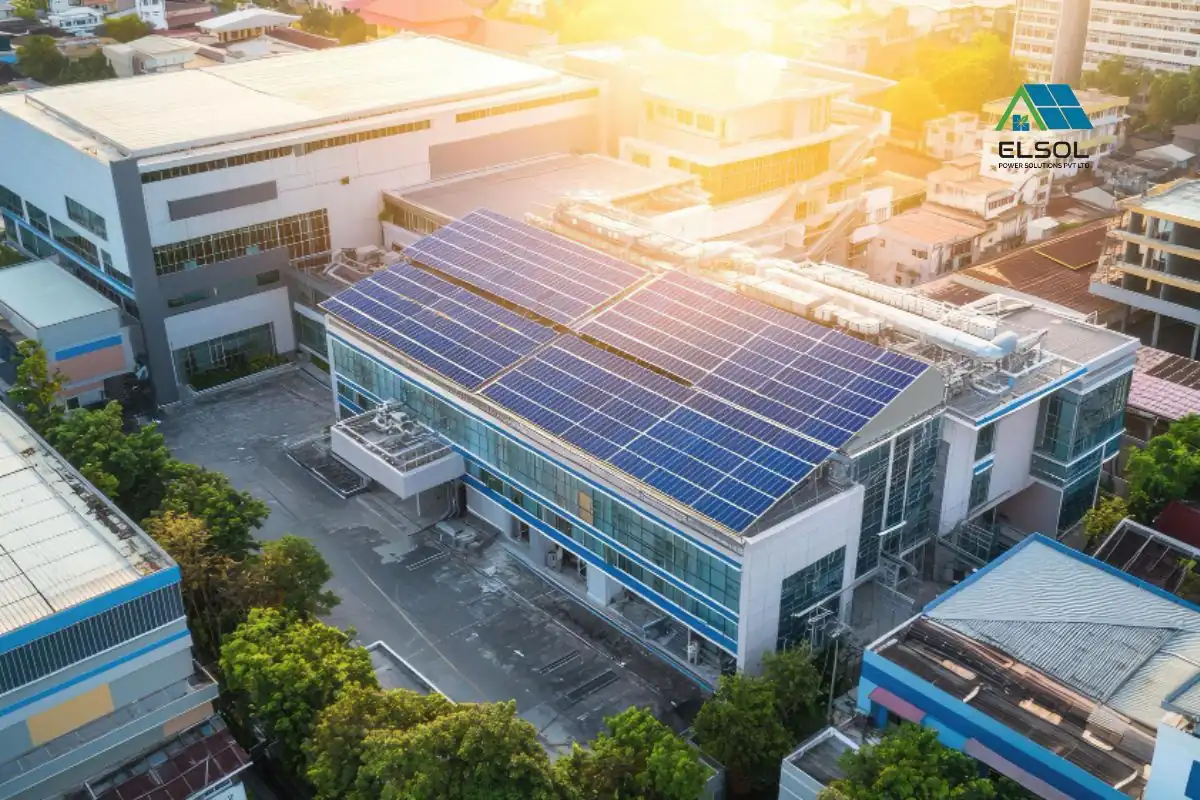


Energy costs to run factories and industrial buildings have been steadily rising, making power reliability one of the major concerns to address at the earliest.
Rooftop solar panels are now emerging into a practical and reliable solution, helping businesses reduce electricity expenses and strengthen long-term energy security.
For industries like warehouses, manufacturing plants, textile mills, food processing units, and heavy-use facilities, incorporating the large unused rooftop areas into productive solar assets must be given importance.
The benefits are immediate and scalable, and factory owners can achieve low operating costs, protect business operations from tariff hikes, improve sustainability credentials, and even predict long-term savings.
With continuous government policy support, structured financing, and simplified approval process, industrial solar adoption is no longer complex. Keep reading as we explore how effective solar adoption for factories and industrial buildings can improve margins and reduce carbon footprint simultaneously.
What Is Rooftop Solar for Industrial Buildings?
Solar panel installation done on the rooftops of warehouses or factories assists in the generation of electricity.
The solar panels absorb sunlight and turn it into electricity, which in turn allows the factory to function throughout the day with minimal dependence on the power grid.
Industrial rooftops are ideal for solar panel installation. They are spacious, receive ample sunlight, and are mostly free from shade. This makes it possible to install a large number of solar panels on the rooftops.
The size of the solar power system ranges from 100 kW to several megawatts. The solar power system is always grid-connected and can be integrated with the existing electrical infrastructure of the building.
Industrial solar power systems are more complex compared to residential solar power systems.
It is necessary to perform a detailed load analysis, check the structural integrity of the building, and plan the system carefully to ensure that it functions efficiently and safely.
Our in-house team of solar experts will ensure in designing accurate system sizing, achieve better structural compatibility, and long-term system reliability that aligns with your operational requirements.
Why Industries Should Consider Rooftop Solar
Electricity consumption always remains the largest recurring expense for both factories and processing units. Installing rooftop solar in large facilities helps convert that expense into a valuable long-term asset.
Key advantages of choosing a solar system for factories include:
- Valuable reduction in monthly electricity bills
- Protection against any kind of future tariff increases
- Improved ESG and sustainability reporting
- Energy independence during peak tariff hours
- Better brand perception of adopting solar energy among global clients
For export-oriented industries, sustainability compliance is becoming mandatory.
Many international buyers evaluate carbon footprint before approving the supply contracts. Solar adoption in your facility will only strengthen compliance credentials.
Industrial units benefit from accelerated depreciation and structured financing options, ensuring the return on investment remains attractive.
When planned properly, solar energy usage becomes a predictable energy cost stabiliser.
Our professional guidance includes proper feasibility assessment and system engineering, ensuring industrial businesses can maximise savings and maintain operational continuity at the same time.
Key Components of Industrial Rooftop Solar Systems
Designing a robust industrial rooftop solar system comprises multiple integrated components to generate the much needed solar power energy.
Main components include:
- Industrial-grade inverters
- High-efficiency solar modules
- DC and AC cabling systems
- Mounting structures designed for large rooftops
- Protection and safety devices
- Monitoring and performance tracking systems
The quality of every incorporated component has a direct effect on the system’s lifespan and generation output. Factories that are in need of continuous operation, achieving reliability is crucial.
Wind load analysis and structural strength must be given importance while handling industrial solar projects.
Metal sheet roofs and warehouses require customised mounting solutions to prevent possible leakages and ensure long-term system reliability.
Our technical expert team are experts in handling installation processes and will ensure the system performs optimally even under heavy industrial load conditions.
How to Evaluate Your Industrial Roof for Solar
Before starting with the installation process, a detailed feasibility study is necessary. Not every roof space can turn suitable for solar systems in the first place.
The evaluation process includes determining:
- Roof orientation and tilt
- Available shadow-free area
- Existing electrical infrastructure
- Structural load-bearing capacity
- Daily energy consumption pattern
Factories operating in the bright daylight hours benefit the most because solar generation aligns with the production schedules.
Structural audits help determine the need for reinforcement. Electrical audits further ensure proper integration of the solar units without disrupting the ongoing operations.
Hiring a professional technical assessment avoids over-sizing or under-sizing the system, both of which can impact ROI calculations.
Our professional installation solution prioritse detailed site inspections to achieve reliable solar power generation in the long-term.
Steps to Install Rooftop Solar for Factories
Industrial solar installation requires following a well-structured process that include:
- Initial site inspection and energy audit
- Technical feasibility study
- Intuitive system design and proposal
- Approval from relevant authorities
- Procurement of various components
- Precise installation and commissioning
- Performance testing and handover
During the installation stage, production activities can continue with minimal to no disruption. Proper planning ensures safety compliance and avoids any size of operational downtime.
Professional execution is crucial because industrial systems involve handling high capacities and complex electrical integrations.
Our certified technical team are experts in handling the installation process, ensuring timely completion and long-term performance reliability for factory operations.
Financials: Cost, Savings & ROI
Industrial solar project customisation and installation cost depends upon various factors like system size, component quality, and structural requirements. Larger capacities most often result in incorporating lower per kW costs.
Typical financial benefits of installing rooftop solar for industries include:
- 20% to 40% reduction in electricity expenses
- Guaranteed payback period of 3 to 5 years (based on everyday and regular usage)
- Accelerated depreciation tax benefits
- Improved internal rate of return (IRR)
Industries consuming high daytime power experience faster payback as maximum solar generation aligns with peak operational hours.
Accurate consumption mapping and load analysis is required before committing to investment. Any size of poor system design can only delay returns and affect projected savings.
Our solar experts will create a detailed financial model that will help you understand possible cost recovery timelines and long-term profitability.
Net Metering & Power Selling for Industrial Solar
Following state policies, industries can vitally use net metering to export surplus energy to the grid. This kind of mechanism lets businesses receive credits for any excessively generated power beyond consumption needs.
In certain regions, net billing or hybrid mechanisms can be applied based on capacity limits and state regulations.
Key advantages of net metering include:
- Reduction in energy wastage
- Better utilisation of installed capacity
- Additional financial optimisation
Industrial solar power consumers must understand the applicable limits, billing structures, and regulatory approvals before planning capacity.
Our professional team will handle regulatory compliance to ensure smooth approval and long-term system reliability for industrial projects.
Case Studies / Real-World Examples
The logistics and manufacturing units are increasingly adopting industrial rooftop solar systems.
Some examples include:
- Food processing units stabilising electricity expenses
- Textile mills reducing energy costs by over 30%
- Warehouses converting unused roofs into revenue-generating assets
In many cases, industrial solar adoption has improved ESG ratings and strengthened investor confidence.
Large industrial rooftops provide scalability advantages. Businesses often chose solar capacities in a way to expand them later based on savings performance.
Our certified technicians design properly engineered solar systems to consistently deliver measurable operational and financial benefits.
Conclusion
Rooftop solar for industrial buildings and factories is more than an environmental initiative. It is a reliable financial strategy that can improve sustainability compliance, reduce operating costs, and enhance long-term energy security.
The rise of grid electricity tariffs has made industrial solar power adoptions more of a practical choice and valuable solutions for manufacturing units, warehouses, and large facilities.
Careful pre-planning, professional installation, and technical feasibility analysis are crucial for achieving maximum return on investment.
At El Sol Power Solutions, the best solar company in India, we ensure accurate system design, follow respective regulatory compliance, and ensure long-term system performance reliability as aligned with your operational goals.
Our certified experts are one phone call away to clear your industrial rooftop solar installation and maintenance related queries.
Frequently Asked Questions (FAQ)
1. What is the ideal size rooftop solar for a factory?
The ideal rooftop solar size for a factor premise depends on the daily electricity consumptions, available shadow-free areas, and respective state policy limits.
2. How much does industrial rooftop solar cost per kW?
The cost of industrial rooftop solar per kW varies based on system capacity, component quality, and structural requirements, with larger systems generally offering lower per-kW pricing.
3. Can factories go fully off-grid with solar?
Factories can technically go fully off-grid with solar, but it requires continuous battery storage investment and is less common than grid-connected systems.
4. What incentives are available in India?
Industries in India can benefit from incentives such as accelerated depreciation, green financing options, and certain state-specific renewable energy benefits.
5. How long do industrial solar panels last?
High-quality industrial solar panels typically last 25 years or even more when properly installed and regularly maintained under professional expert guidance.