

10 Solar Panel Problems That Need Professional Repair Services
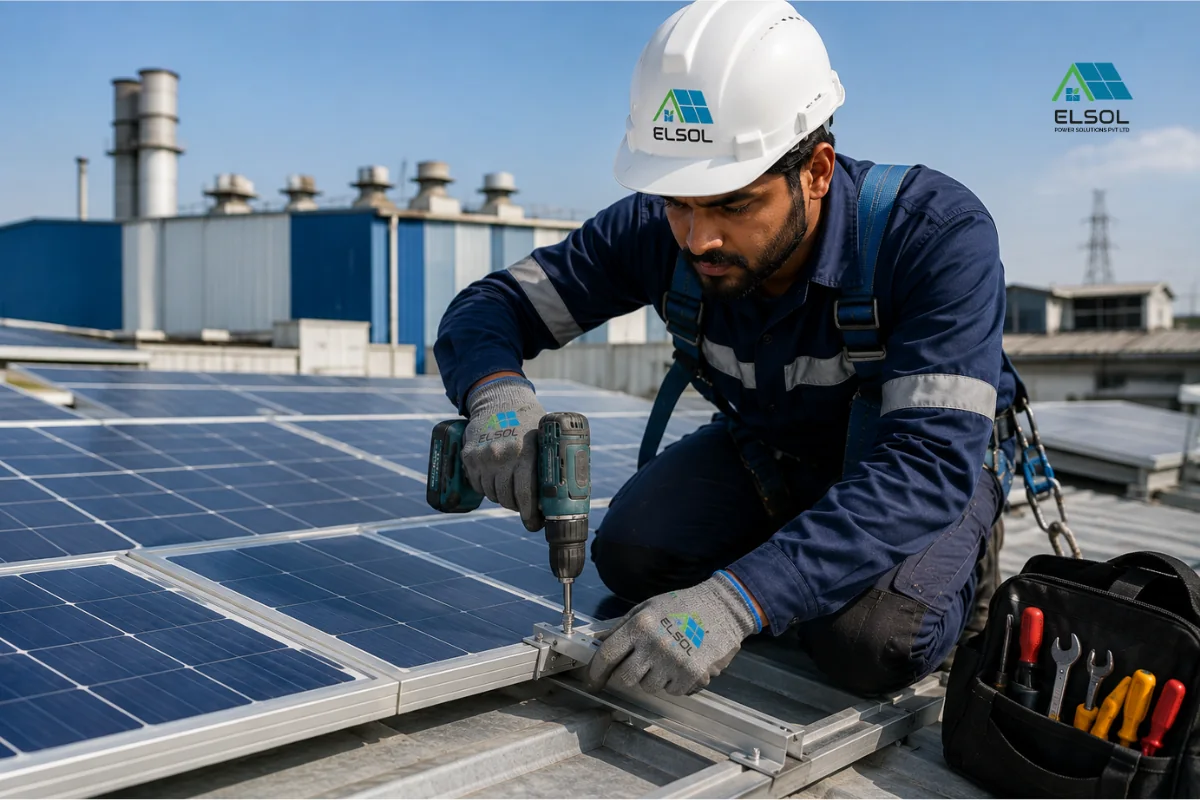


Most quality solar panels are designed to operate for 25 years or more under long-term performance warranties, but they still require periodic inspection and maintenance to deliver expected output.
With India’s grid-connected rooftop solar capacity reaching 26.75 GW and total solar capacity touching 154.24 GW as of 30 April 2026, more homeowners and businesses than ever before are relying on rooftop solar systems. And with that growth comes a growing number of systems that are silently underperforming, faulting, or heading toward expensive damage.
A minor issue that is inexpensive to fix today can turn into a much costlier repair later if it is ignored and allowed to damage other components.
This blog walks you through the 10 most common solar panel problems that need professional repair services, what causes them, how to spot them early, and what happens if you ignore them.
Why Solar Panels Develop Problems Over Time
Solar panels have no moving parts. That’s why they last so long.
But they sit outdoors 365 days a year, exposed to heat, rain, dust, UV radiation, and bird activity. In India specifically, the combination of high temperatures, monsoon humidity, coastal salt air, and industrial pollution creates conditions that wear down components faster than most manufacturers’ lab tests account for.
Problems also come from poor installation. With 44.6 GW of new solar added in FY 2026, the pace of installations has been extraordinary. As the market has expanded rapidly, installation quality can vary significantly, and poor workmanship often shows up months later as lower generation, nuisance trips, or electrical faults. Substandard workmanship shows up 6 to 18 months later, usually as unexplained generation drops or electrical faults.
Here’s the thing: most problems are detectable early. A professional inspection at the right time catches them before they compound.
10 Solar Panel Problems That Need Professional Attention
1. Unexplained Drop in Energy Generation
Your system produces less power than it should. Your monthly generation has been quietly falling for weeks. This is the most common complaint, and one of the hardest to self-diagnose.
Even without visible damage, generation can decline over time because of soiling, shading, string faults, ageing components, or inverter issues, which is why unexplained output loss should be checked early.
For a 5 kW rooftop system, that’s 135 to 243 units of lost electricity every quarter.
Possible causes include:
- Dust and soiling buildup on panel surfaces
- Partial shading from newly grown trees or structures
- A faulty string in the panel array
- Early-stage cell degradation
- Inverter efficiency loss
Why you need a professional: Identifying the root cause requires checking DC-side current readings, analysing monitoring data trends, and sometimes IV-curve tracing or thermal scanning. Guessing the cause leads to wrong fixes.
2. Inverter Failure or Error Codes
The inverter is the hardest-working component in your solar system. It converts DC power from your panels into AC power your home or factory can use. It runs every daylight hour, every single day.
A good-quality string inverter often lasts around 8–12 years in many installations, although actual life depends on brand, ventilation, temperature, and maintenance history. Out of warranty, a replacement inverter for a 5 kW system costs ₹40,000 to ₹60,000 in India in 2026.
Warning signs to watch for:
- Red or orange LED indicators on the inverter display
- Error codes showing on screen that don’t clear after restart
- System shutting down and restarting repeatedly
- Unusual buzzing or humming sounds
- No generation showing on a sunny day
Inverter faults are among the most common reasons solar owners need professional service, which is why early diagnosis is so important.
Why you need a professional: Inverters carry live high-voltage DC power. Opening or tampering with a faulty inverter without proper isolation and safety equipment is a serious electrical hazard. Technicians also need diagnostic tools to read fault logs and determine whether the fix is a firmware update, a component swap, or a full replacement.
3. Microcracks in Solar Cells
Microcracks are invisible to the naked eye. You cannot see them by standing on your roof and looking at the panels.
They form during manufacturing, rough handling during transport, or installation. They can also develop later from thermal cycling (panels heating and cooling every day) or hail impact. Research and field experience show that hot, humid operating conditions can accelerate certain degradation pathways, particularly in some older module technologies, making professional inspection more important in such climates.
A single microcrack starts small. Over time it expands, creating dead zones within a cell that cause current mismatch, which then triggers hotspots (more on that below).
How to detect: Electroluminescence (EL) imaging, where a low-light camera captures emission from electrically stimulated cells. Any cracked or dead cell appears as a dark patch. This requires specialised lab-grade cameras.
Why you need a professional: EL imaging cannot be done DIY. Microcracks also cannot be repaired. Once detected, the options are panel replacement (if under warranty) or accepting the efficiency loss if stable and minor. A professional helps you document the defect correctly for a warranty claim.
4. Hot Spots and Cell Overheating
A hotspot forms when one cell or section of a panel overheats significantly compared to the surrounding cells. In thermal imaging, it shows as a bright patch of heat against a cooler panel background.
Hotspots are often the endpoint of other problems: an uncleared microcrack, a bird dropping sitting on one cell in a string, partial shading, or a failed bypass diode. Left unaddressed, hotspots can:
- Burn through the cell laminate
- Crack the panel glass from thermal stress
- In serious cases, start fires in roof structures
Warning signs you can spot yourself:
- Brown or dark patches on the panel surface
- Visible discolouration on the back sheet
- One panel in a string consistently reading lower than the others
Why you need a professional: Thermal imaging using infrared cameras is the only reliable detection method. Technicians also need to determine whether the hotspot is caused by soiling (fixable with cleaning) or internal cell damage (requires replacement). DIY thermal imaging without training leads to misdiagnosis.
5. Loose or Damaged Wiring
Solar systems have DC wiring running from panels to the inverter, and AC wiring from the inverter to your distribution board. Both sets of connections are exposed to outdoor conditions, thermal expansion and contraction cycles, and in many Indian installations, rodent activity.
Loose DC connections are one of the most commonly missed problems. A technician checking DC and AC side connections during an annual audit in 2026 can find issues that would otherwise remain invisible until a fault shuts the system down.
The risks of ignoring loose or damaged wiring:
- Arc faults that can start electrical fires
- Persistent undervoltage that reduces generation
- Short circuits that damage the inverter
- Complete system shutdown with no obvious cause
Wiring repair costs are low when caught early. An arc fault or inverter damage caused by ignoring loose wiring is an expensive problem.
Why you need a professional: DC wiring in solar systems carries voltage even when the inverter is switched off. Safe isolation requires proper training and equipment. A qualified technician also identifies whether MC4 connectors are corroded, incorrectly crimped, or undersized for the load.
6. Potential Induced Degradation (PID)
PID is one of the most expensive solar panel problems because it looks like normal aging until it’s advanced.
It occurs when voltage differentials between solar cells and the grounded aluminium frame cause ion migration through the panel encapsulant. The result is accelerating power loss. Verified field cases show 20% or more power loss in affected panels after 5-10 years of exposure in humid, high-temperature conditions.
India’s climate, especially coastal regions and states like Kerala, Maharashtra, and Tamil Nadu, creates near-ideal conditions for PID. High humidity plus high operating temperatures plus older P-type PERC technology is a concerning combination.
The 2026 advantage: N-type panels (TOPCon, HJT) are significantly less susceptible to PID. But systems installed 5-8 years ago used older P-type technology and are now entering the highest-risk window.
Why you need a professional: PID is confirmed only through IV-curve tracing and specific electrical tests. Treatment options include PID reversal boxes, system re-grounding, or panel replacement depending on severity. None of these should be attempted without proper testing first.
7. Dirt, Dust, and Bird Dropping Buildup
This one sounds simple. It isn’t.
Regular dust accumulation is manageable. But bird droppings are acidic and concentrated. Sitting on a panel for weeks, they etch into the anti-reflective coating and create permanent opaque patches that no amount of cleaning removes.
Using the wrong cleaning method makes things worse. Common DIY mistakes in 2026 include:
- Cleaning with cold water on panels hot from afternoon sun, causing thermal shock and microcracks
- Using high-pressure jets that force water into junction boxes, causing corrosion and short circuits
- Using household cleaning agents like vinegar or baking soda that strip the anti-reflective coating
- Cleaning with coarse cloths that scratch the glass surface
- Cleaning without switching the system off first, a serious electrical safety risk
Using the wrong cleaning method can damage panel surfaces, leave mineral deposits, create safety risks, or affect warranty coverage if manufacturer guidelines are not followed.
Why you need a professional: Professional cleaning uses deionised or low-TDS water, non-abrasive microfibre tools, and correct technique (top-down, morning or evening only, system off). In hard-water areas, untreated water can leave mineral deposits on panel glass over time, which is why treated or low-TDS water is often the safer choice for professional cleaning.
8. Mounting Structure Corrosion or Loosening
The mounting structure that holds your panels to the roof is designed for 25 years. But the bolts, clamps, and brackets are exposed to humidity, coastal salt air, monsoon cycles, and thermal stress every single year.
Corroded or loosened mounting hardware is a structural risk. Panels that aren’t properly anchored can shift during strong winds, damaging the panels themselves, the roof waterproofing, and in worst cases, falling.
In coastal and high-humidity environments, mounting hardware can corrode faster if the wrong materials or inadequate protective finishes are used.
Warning signs:
- Visible rust streaks on mounting rails
- Panels that visibly tilt or shift from their original position
- Water stains inside the building near roof penetrations
- Rattling sounds from the roof during windy conditions
Why you need a professional: Structural inspection requires a trained eye and torque tools to verify clamp tightness. Accessing roof-mounted hardware safely also requires working-at-height equipment.
9. Soiling from Industrial Pollution or Hard Water Scaling
This is a specific Indian problem that most maintenance guides written for Western markets don’t cover.
In industrial areas, airborne pollutants like silica dust, fly ash, and chemical particulates from nearby factories create a film on panels that doesn’t wash off with ordinary water. This is different from regular road dust and requires specialised cleaning agents.
Hard water scaling is an equal problem. CGWB 2024 data shows widespread water salinity across Gujarat’s industrial belts, with TDS levels far above the BIS desirable limit of 500 ppm. Cleaning panels with high-TDS tap water leaves behind white calcium carbonate scaling that permanently hazes the glass.
The impact: In high-pollution industrial zones, panels cleaned with unfiltered groundwater can lose 15-25% of generation capacity to permanent scaling within 2 years of installation.
Why you need a professional: Industrial-grade cleaning uses deionised water, chemical descalers rated for solar glass, and periodic anti-soiling coating applications. This cannot be replicated with a garden hose.
10. Poor or Faulty Original Installation
This is the problem nobody wants to talk about, but it’s real.
India added 44.6 GW of new solar capacity in FY 2026 across residential, commercial, and industrial segments. Not every installation from that wave was done correctly. Common poor-installation problems that show up 6-18 months later include:
- Panels oriented or tilted incorrectly, reducing generation by 10-20%
- Undersized DC cables causing resistive losses
- Incorrect MC4 connector crimping causing arcing at connection points
- Earthing not done properly, creating shock risk and PID susceptibility
- Shading analysis not done before installation, so strings shade each other seasonally
Warning signs:
- System generating significantly less than the installer projected
- Generation peaks at wrong time of day for your roof orientation
- System performance varies strangely with seasons without seasonal cause
Why you need a professional: Diagnosing installation faults requires comparing system output against a proper energy simulation for your specific roof orientation and location. Rewiring, re-tilting, or re-earthing also requires DISCOM compliance and safe electrical work.
When Should You Call Professional Solar Repair Services?
Don’t wait for a total system shutdown. Call a professional when you see any of these:
| Warning Sign | What It Could Indicate |
| Generation 15% below expected for 2+ weeks | Soiling, shading, cell fault, or inverter issue |
| Inverter showing red LED or error code | Inverter fault or DC-side wiring problem |
| Dark or brown patches on panel surface | Hotspot or cell degradation |
| Buzzing or clicking sound from inverter | Electrical fault or cooling fan failure |
| Water stain inside building near roof penetration | Mounting seal failure or improper installation |
| Visible rust on mounting rails | Structural corrosion |
| System shutting down and restarting | Overtemperature, grid fault, or inverter failure |
| No generation on a clear sunny day | Complete inverter failure or main fuse trip |
What Happens If You Ignore These Problems?
The cost of ignoring solar panel problems compounds fast. Here’s a realistic view of repair cost escalation in 2026:
| Problem | Fixed Early | Ignored and Escalated |
| Loose DC connector | ₹500 technician visit | ₹40,000-60,000 inverter replacement |
| Bird dropping on panel | ₹500 professional cleaning | Permanent coating damage, 5-10% permanent output loss |
| Inverter error code | ₹1,500 diagnostic + firmware fix | Full inverter failure, ₹40,000-60,000 replacement |
| Minor microcrack | Panel warranty claim (₹0 if caught in time) | Hotspot, glass breakage, fire risk |
| Loose mounting bolt | ₹800 tightening | Panel shift, roof penetration damage, panel replacement |
| Early PID | PID reversal box ₹5,000-10,000 | 20% permanent power loss across entire array |
India repair cost estimates based on 2026 market rates from Alpex Solar, SolarSquare, and Solvix maintenance pricing guides.
How to Prevent Most of These Problems
You can prevent most solar panel problems with one simple habit: scheduled professional maintenance.
Here’s a practical 2026 maintenance schedule for Indian rooftop solar systems:
- Every 1-3 months (depending on pollution levels): Professional panel cleaning with low-TDS water
- Every 6 months: Electrical inspection covering inverter error logs, DC and AC side connections, earthing resistance
- Every 12 months: Full technical audit including mounting structure check, thermal imaging, and generation performance analysis against baseline
- Every 8-10 years: Inverter health check and pre-emptive replacement planning before warranty expiry
Annual maintenance cost in India runs ₹1,000 to ₹3,000 per kW for on-grid systems, according to 2026 market data from Alpex Solar. For a 5 kW rooftop system, that’s ₹5,000 to ₹15,000 per year to protect an asset worth ₹2.5-3 lakh with a 25-year value of savings.
That’s a very straightforward calculation.
Frequently Asked Questions
1. How do I know if my solar panels are underperforming?
Compare your actual monthly generation (shown on your inverter or monitoring app) against the projected output your installer gave you at the time of installation. A consistent gap of 15% or more for 2+ weeks is a signal to call for a professional inspection, not just a cleaning.
2. Can I clean my solar panels myself?
Light surface dust may sometimes be removed carefully if your installer and module manufacturer allow it, but roof access, stubborn soiling, bird droppings, hard-water scaling, and any cleaning near live electrical equipment are better handled by trained professionals.
3. How long do solar inverters last in India?
Good quality string inverters last 8-12 years in Indian conditions, according to 2026 maintenance guidelines. Their warranty is typically 5-10 years. Budget for inverter replacement around Year 8-10 of your system’s life. Out-of-warranty replacement for a 5 kW system costs ₹40,000 to ₹60,000 in 2026.
4. Is an Annual Maintenance Contract (AMC) worth it?
A well-structured AMC is worth it. A cheap one that only includes quarterly cleaning visits is not. Before signing any AMC, ask for a specific checklist of what the technical audit covers. It should include inverter error log review, DC and AC side electrical checks, earthing verification, and mounting structure inspection, not just visual cleaning.
5. What is the most expensive solar panel problem to fix?
Inverter replacement is the most common large expense (₹40,000-60,000 for a 5 kW system). Advanced PID affecting a full array can cost more in permanent generation losses. Roof penetration damage from a failed mounting seal can add structural repair costs on top of panel work.
6. Will fixing solar panel problems void my warranty?
Professional repair by qualified technicians does not void your warranty. DIY repairs, using unqualified labour, or cleaning with non-approved chemicals will void most manufacturer warranties. Always use certified solar panel installers for any repair work and keep documentation.
7. How often should I have my solar system professionally inspected?
A minimum of once a year for a full technical inspection. In high-pollution industrial zones or coastal areas, every 6 months is recommended. Don’t wait for a visible fault. Early inspection catches the problems that aren’t visible yet.
8. My system was installed 2 years ago and generation has dropped. What could it be?
Two years is exactly when poor-installation issues start showing up. Check whether your projected vs actual generation gap has been growing steadily or dropped suddenly. A sudden drop suggests an electrical fault. A gradual drift suggests soiling, shading, or early PID. Get a professional diagnosis before assuming either.
Your Solar System Needs the Right Team Behind It
India has 154 GW of installed solar capacity as of April 2026. The systems installed 3, 5, and 8 years ago are now entering the age window where problems become more common and more costly if ignored.
A solar PV system is a long-term energy asset, and its financial value depends on how closely it continues to perform to its expected output over time. The returns depend entirely on the system performing at or near its rated capacity throughout that life. Every percentage point of undetected degradation is money leaving your savings every single month.
El Sol Power Solutions provides professional solar repair and maintenance services for residential, commercial, and industrial solar systems across India. The team handles complete diagnostic inspections, inverter servicing, panel-level testing, earthing checks, and mounting structure assessments.
Whether your system was installed by El Sol or someone else, the team brings the technical depth to find what’s wrong, fix it correctly, and protect your long-term savings.
If your system isn’t performing the way it should, or if it’s been over a year since your last professional inspection, reach out to the best solar company in India for an honest assessment.
Trusted solar panel installers with 9 years of field experience across rooftop solar systems make the difference between a system that delivers on its promise and one that silently costs you.


