Solar Subsidy in Madhya Pradesh: Eligibility, Benefits & How to Apply



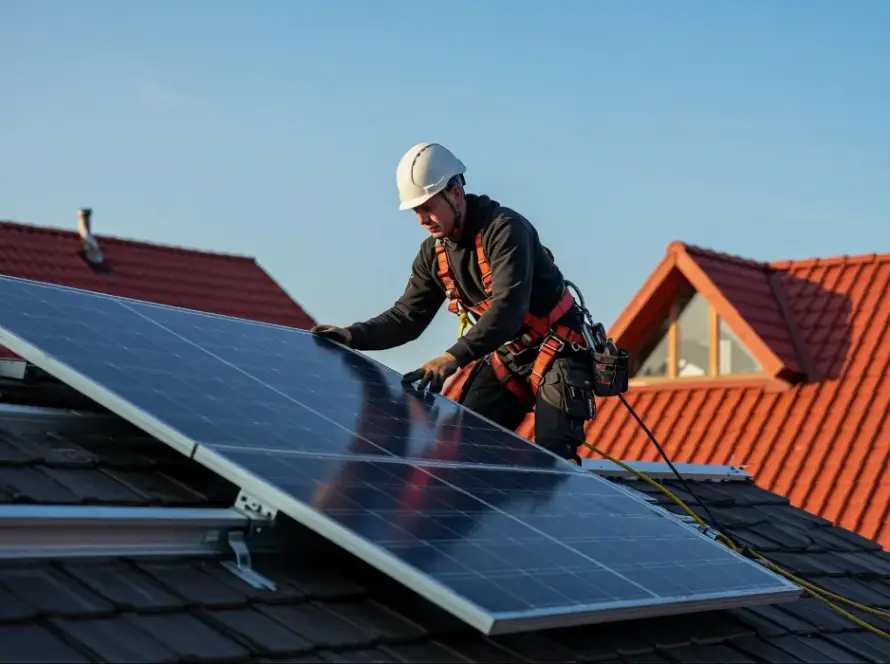
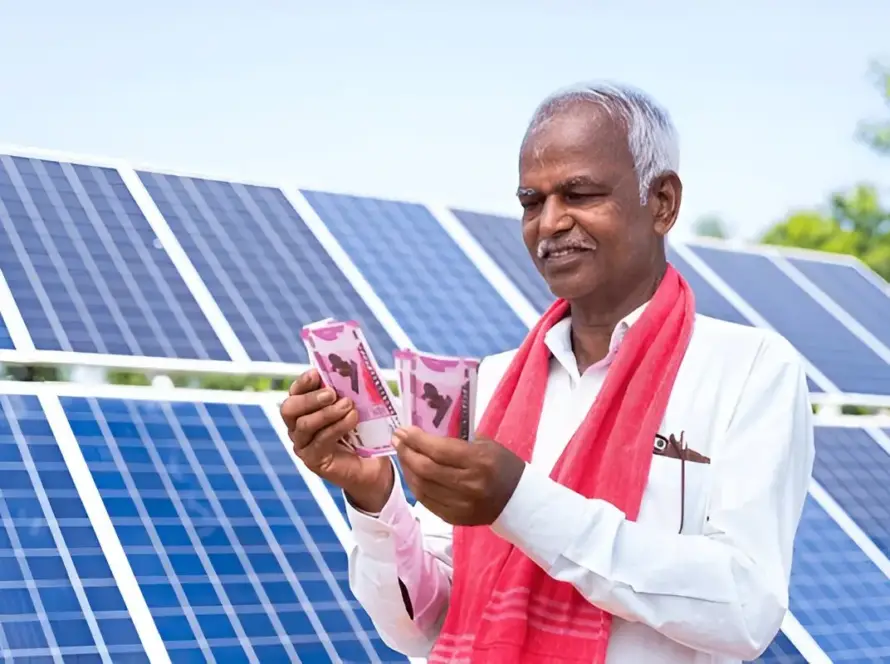
Homeowners in Madhya Pradesh can claim a central government subsidy of up to ₹78,000 on rooftop solar under the PM Surya Ghar Muft Bijli Yojana. The subsidy is capacity-based: ₹30,000 per kW for the first 2 kW and an additional ₹18,000 for the third kW — meaning ₹30,000 for a 1 kW system, ₹60,000 for 2 kW, and the maximum ₹78,000 for systems of 3 kW and above. The subsidy is transferred directly to the bank account submitted by the consumer after installation, DISCOM verification, portal approval and e-token redemption. The bank details and supporting document must belong to the concerned consumer, and applications are made online at pmsuryaghar.gov.in.
With Madhya Pradesh’s abundant sunshine, rising electricity tariffs, and the Union Budget 2026–27 allocating ₹22,000 crore specifically to this scheme, there has never been a better-funded moment to install rooftop solar in the state. Here is everything you need to know — eligibility, exact subsidy amounts, benefits, and the complete application process — using the latest 2026 figures.
Solar Subsidy Amounts in Madhya Pradesh (2026)
The subsidy available in Madhya Pradesh comes through the central PM Surya Ghar: Muft Bijli Yojana, launched in February 2024, and applies uniformly across the state — whether you live in Bhopal, Indore, Gwalior, Jabalpur, Ujjain, or a smaller town.
| System Capacity | Central Subsidy (CFA) |
| 1 kW | ₹30,000 |
| 2 kW | ₹60,000 |
| 3 kW and above | ₹78,000 (maximum) |
Two things every applicant should understand clearly:
The subsidy is capped at ₹78,000. A 5 kW or 10 kW system receives the same ₹78,000 as a 3 kW system; capacity beyond 3 kW is paid by you (or financed through a solar loan). This is why a 3 kW system is the sweet spot for most Madhya Pradesh households consuming 200–400 units a month — it captures the full subsidy and typically generates 360–400+ units monthly under MP’s strong sunlight. However, the ideal system size should be based on annual electricity consumption, available roof area, sanctioned load, shading and expected generation at the site.
What this means in real money. At 2026 market prices, the price of a 3 kW rooftop solar system varies according to panel technology, inverter brand, mounting structure, roof conditions and installation scope. After the ₹78,000 subsidy lands in your account, Customers should obtain a site-specific quotation before calculating the effective cost after subsidy.
Who Is Eligible for the Solar Subsidy in MP?
Eligibility under PM Surya Ghar is straightforward. You qualify if you are:
- An Indian citizen and a resident of Madhya Pradesh
- The owner of a residential property with a valid domestic electricity connection from your local DISCOM — MP Poorv Kshetra (Jabalpur region), MP Madhya Kshetra (Bhopal region), or MP Paschim Kshetra (Indore region)
- The holder of a rooftop with adequate shadow-free space (roughly 100 sq. ft. per kW)
- Someone who has not previously claimed a solar subsidy on the same electricity connection — the benefit is one per residential connection
- An Aadhaar-linked bank account holder, since the subsidy is paid through Direct Benefit Transfer
Group housing societies and residential welfare associations in MP can also claim subsidies for common-area installations with resident consent. Commercial and industrial buildings are not eligible for this particular CFA — they benefit instead through accelerated depreciation and net metering economics.
To qualify for central subsidy, the installation must use modules that satisfy the applicable DCR and ALMM requirements and must be completed through a vendor registered on the PM Surya Ghar National Portal. Systems bought from unregistered shops or self-installed receive zero subsidy, no matter how good the equipment is.
Benefits Beyond the Subsidy
The ₹78,000 is only the headline. The full benefit stack for a Madhya Pradesh homeowner in 2026 looks like this:
Up to 300 units of free electricity monthly. A suitably sized rooftop solar system can help a household generate up to around 300 units of electricity per month. Actual bill savings depend on solar generation, household consumption, metering arrangements and continuing DISCOM charges.
Net metering income. Surplus daytime generation is exported to the grid and credited against your consumption. In Madhya Pradesh, residential consumers can generally avail net metering for systems up to 10 kW.
Collateral-free solar loans. Eligible consumers may access collateral-free or concessional solar-loan products from participating banks. Interest rates, loan limits, tenure and eligibility conditions vary, so applicants should verify the current offer through the National Portal, Jan Samarth or the concerned bank.
Fast payback, long earnings. A properly designed residential system may recover its net investment in approximately four to six years, depending on system cost, subsidy, generation, electricity tariff and consumption pattern. After payback, it can provide significantly lower-cost electricity for many years, although fixed grid charges and maintenance costs may continue.
Proven scheme at scale. According to official government data released in March 2026, more than 26.19 lakh rooftop systems had been installed under the scheme, ₹17,967.53 crore had been disbursed as CFA, and approximately 9.57 GW of rooftop capacity had been added.
How to Apply for Solar Subsidy in Madhya Pradesh: Step by Step
The entire process is online through the national portal. Here is the exact sequence:
- Register on pmsuryaghar.gov.in. Select Madhya Pradesh as your state, choose your DISCOM (Poorv, Madhya, or Paschim Kshetra), and enter your consumer number, mobile number, and email.
- Submit your rooftop solar application. Specify your desired capacity — 3 kW is the typical choice for full subsidy capture — and upload your latest electricity bill.
- Wait for feasibility approval. For systems up to 10 kW, technical feasibility may be deemed approved or processed automatically under the simplified rules, subject to the current implementation procedure followed by the concerned Madhya Pradesh DISCOM.
- Install through an empanelled vendor. Confirm that the modules meet the applicable ALMM and DCR requirements and that the inverter and other components comply with the technical specifications prescribed under the scheme and by the DISCOM.
- Apply for net metering and inspection. After installation, submit plant details on the portal. The DISCOM inspects and commissions the system and installs the net meter.
- Receive your subsidy. After DISCOM verification and approval, the consumer must redeem the activated e-token on the National Portal. Official data indicates that CFA processing generally takes around 15 days after the redemption request when all credentials and documents are correct, although actual bank-credit time may vary.
Documents to keep ready: Keep your latest electricity bill, consumer account details, identification documents, bank-account proof and any roof-use or property documents requested by the National Portal or concerned DISCOM ready before applying. Incomplete or incorrect documents, use of non-compliant equipment and failure to follow the prescribed portal or DISCOM process can delay the application or make the installation ineligible for subsidy.
Why Acting in 2026 Makes Sense
The scheme targets 1 crore households by March 2027, and with over a quarter of that target already achieved, the window is measurably closing. Subsidy rates are at their most generous right now; there is no guarantee they remain at these levels as the target nears. Meanwhile, every month you stay fully on grid power in MP is a full-tariff bill that never comes back. Madhya Pradesh’s rollout is actively accelerating with state-specific facilitation, which means empanelled vendor capacity and DISCOM processing are working in your favour today — a situation worth using while it lasts.
Choosing the Right Installation Partner in MP
Because the subsidy is legally tied to empanelled vendors, ALMM panels, and correct portal filing, your choice of solar panel installers matters as much as the panels themselves. A capable solar company in Madhya Pradesh should handle the entire chain — feasibility, portal application, DCR-compliant procurement, installation, net metering, and subsidy follow-up — so the ₹78,000 actually reaches your bank account without you chasing paperwork.
El Sol Power Solutions Pvt Ltd brings 9+ years of rooftop solar experience, 8,000+ customers, and 25 MW of installations to Madhya Pradesh. Managing everything from your first site visit to subsidy credit, El Sol provides post-installation repair and maintenance support in accordance with PM Surya Ghar requirements and the service schedule stated in the customer’s final agreement. If you want your PM Surya Ghar application done right the first time, get a free consultation at elsol.co.in before your neighbourhood’s installation queue grows longer.
Frequently Asked Questions
1. How much solar subsidy can I get in Madhya Pradesh in 2026?
Up to ₹78,000 under PM Surya Ghar Muft Bijli Yojana: ₹30,000 for 1 kW, ₹60,000 for 2 kW, and ₹78,000 for 3 kW and above. Systems larger than 3 kW receive no additional subsidy beyond the cap.
2. Is there a separate Madhya Pradesh state subsidy on top of the central one?
The primary subsidy in MP is the central PM Surya Ghar CFA. Unlike a few states that offer top-ups, MP’s benefit currently flows through the central scheme; always check the “State Scheme” section on the national portal after login for any newly added state benefits.
3. Who implements the scheme in Madhya Pradesh?
Applications are processed through the national portal in coordination with your local DISCOM — MP Poorv Kshetra (Jabalpur), MP Madhya Kshetra (Bhopal), or MP Paschim Kshetra (Indore).
4. How long does the subsidy take to arrive?
After your system is inspected, commissioned, and net-metered, the subsidy is transferred via Direct Benefit Transfer, typically within 30 days.
5. Can I claim the subsidy if I install panels myself or buy from a local shop?
No. The subsidy requires installation by an MNRE-empanelled vendor using ALMM-listed, Made-in-India (DCR) panels. Non-compliant installations receive nothing.
6. What is the ideal system size for an MP home?
For most households consuming 200–400 units monthly, 3 kW is ideal — it captures the maximum ₹78,000 subsidy and generates enough to bring bills close to zero, with payback in roughly 4–6 years.