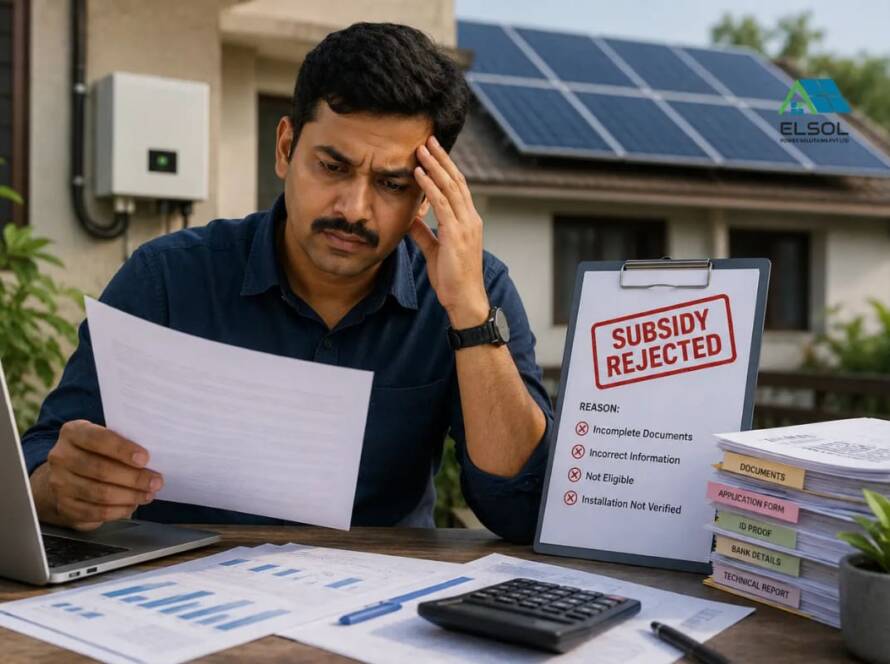
You finally installed solar at your place, expecting your monthly bill to drop close to zero. But the next bill arrives, and it’s still uncomfortably high.
If this sounds familiar, you are not alone. Across India, thousands of homeowners who switched to rooftop solar under the PM Surya Ghar Muft Bijli Yojana or a private installation are asking the same question.
The good news is that a high bill after going solar almost always has a fixable cause. Keep reading as we break down the real reasons behind it, using the latest 2026 rules around net metering, subsidies, and DISCOM tariffs in India.
1. Your System Is Too Small for Your Actual Usage
A solar system is designed around your electricity consumption at the time of installation, not your consumption five years later.
If your household has added an AC, a second refrigerator, an EV charger, or simply has more people at home now, your daily unit consumption goes up. Your panels, however, generate the same amount of power as before. The gap between what you use and what your system produces is billed at full retail rate.
Under PM Surya Ghar, a 3 kW system, the most common size for Indian homes, typically generates around 350 to 400 units a month, depending on your city’s sunlight hours. If your monthly usage has crept past that, your bill will reflect the shortfall, even with solar fully functional.
What to do: Compare your pre-solar and post-solar electricity bills in terms of units consumed, not just the rupee amount. If usage has grown 20 to 30 percent, your system needs to grow with it.
2. You’re Not Using Solar Power When It’s Actually Being Generated
This is the single biggest reason Indian households get surprised by their bills.
Solar panels generate the most power between 10 AM and 4 PM. If your home is empty during those hours because everyone is at work or school, that power gets exported to the grid under net metering. At night, when your family is actually using electricity for AC, cooking, and lights, your panels produce nothing and you draw power back from the grid.
Net metering in India works on a simple formula: units imported minus units exported equals net units billed. If your exports during the day don’t match your imports at night, you still get charged for the difference at full DISCOM rates.
What to do: Shift heavy appliance use, washing machines, water pumps, irons, and geysers, to daylight hours wherever possible. Every unit you consume directly from your panels during the day is a unit you don’t need to import later at retail price.
3. Fixed and Minimum Charges Don’t Disappear With Solar
A common myth is that solar should bring your bill to zero. In reality, DISCOMs in India charge a fixed or minimum demand charge simply for staying connected to the grid, regardless of how much power you actually draw.
This matters more in 2026 than it used to. The Central Electricity Authority has proposed a national framework asking DISCOMs to recover a larger share of revenue through fixed charges rather than per-unit energy charges, since rooftop solar adoption is cutting into their energy sales. Maharashtra’s regulator, MERC, has already started raising fixed charges and lowering energy charges in a phased manner through FY26 to FY30.
In practical terms, this means even a well-sized solar system with strong net metering credits will still show some fixed charge on your bill every month. That’s normal and not a sign your system is underperforming.
4. Your DISCOM Has Introduced Time-of-Day or Solar-Hour Pricing
India’s billing rules are shifting toward Time-of-Day, or ToD, tariffs. A draft amendment to the Electricity Rights of Consumers Rules requires that peak-hour electricity, typically the evening hours when solar isn’t generating, cost noticeably more than solar-hour electricity during the day.
For households on ToD billing, this means the power you export at noon is valued lower than the power you import in the evening. Even if your monthly units balance out on paper, the rupee value doesn’t, because you’re effectively selling cheap and buying expensive.
Some states are also discussing a separate net metering charge for prosumers, since DISCOMs currently absorb the cost of accepting your midday export and supplying you again at night. Keep an eye on your state’s tariff order, since these changes vary widely by DISCOM and are still evolving through 2026.
5. Dust, Shade, or an Aging System Is Cutting Your Generation
Solar panels lose output quietly, often without any visible warning.
Dust and pollen can reduce panel efficiency noticeably if panels aren’t cleaned for several months, especially in dry or dusty parts of India. A tree that has grown taller since installation can shade part of your array for a few hours a day, and because panels are wired in strings, even partial shading on one panel can drag down the output of the whole string. Inverters and wiring also degrade gradually, and a failing component can quietly cut your generation without tripping any alarm.
What to do: Check your solar monitoring app or inverter display regularly and compare actual daily generation against what was promised at installation. A consistent gap of 20 percent or more usually means it’s time for a cleaning or a technician visit.
6. Seasonal Drop in Generation During Monsoon and Winter
Solar output in India isn’t flat through the year. Monsoon clouds and shorter winter days can cut generation noticeably compared to peak summer months, even though your household usage, especially for lighting and heating in winter, often stays the same or rises.
This is completely normal and not a system fault. Most net metering frameworks in India run on an annual settlement cycle, so credits you build up in sunnier months can offset higher bills later in the year, though the exact rules depend on your state DISCOM.
7. ALMM Compliance and Subsidy Mismatches
If your solar panel installation used panels that aren’t on the government’s Approved List of Models and Manufacturers, your subsidy claim under PM Surya Ghar can be rejected or delayed, leaving you to absorb costs you expected the subsidy to cover. From June 2026, ALMM compliance requirements have also been extended to domestic cell manufacturing, not just the module assembly, making it even more important to verify your installer’s equipment sourcing before signing off.
This doesn’t directly raise your monthly electricity bill, but it does change the overall economics of your solar investment, since a smaller-than-expected subsidy means a longer payback period and less cushion if your bills stay higher than planned.
How to Actually Bring Your Bill Down
Start by pulling your DISCOM bill and checking the breakdown of imported units, exported units, and fixed charges separately, instead of just looking at the total amount due. Compare your current monthly consumption in units to what it was before installation. Shift discretionary heavy loads to the 10 AM to 4 PM solar window. Get your panels inspected and cleaned if generation has dropped versus your installation estimate. And if you’re unsure whether your system size still matches your household’s needs, get it reassessed rather than assuming the system is simply not working.
Frequently Asked Questions
1. Will solar ever bring my bill to zero?
It can come close in many Indian states if your system is right-sized and well-maintained, but most DISCOMs still levy a small fixed or minimum charge regardless of how little grid power you actually use.
2. Does using more appliances cancel my PM Surya Ghar subsidy?
No. Increased consumption after installation does not affect your subsidy eligibility or amount; it only affects how much of your usage is offset by your existing system.
3. Why is my bill higher in winter even though I have solar?
Shorter days and more cloud cover reduce generation, while household usage for heating and lighting often increases, creating a temporary gap that usually balances out over the year through net metering credits.
4. Can I add more panels later if my system is undersized?
Yes, in most cases, provided your rooftop space and sanctioned load allow it. A qualified installer can assess whether expansion or a net metering capacity upgrade is needed.
Conclusion
A high electricity bill after installing solar panels is frustrating, but it’s rarely a sign that solar “doesn’t work.” It usually points to a mismatch between system size and actual usage, the timing of when you consume power versus when you generate it, or changes in DISCOM tariff structures that are unfolding across India through 2026.
At El Sol Power Solutions, a trusted solar company in India, we help homeowners diagnose exactly why their bills aren’t dropping as expected, whether that means resizing a system, fixing a net metering issue, or simply adjusting appliance habits to match solar generation hours. If your bill is still high after going solar, our team can review your usage pattern and your DISCOM billing structure to find out exactly where the gap is coming from.